
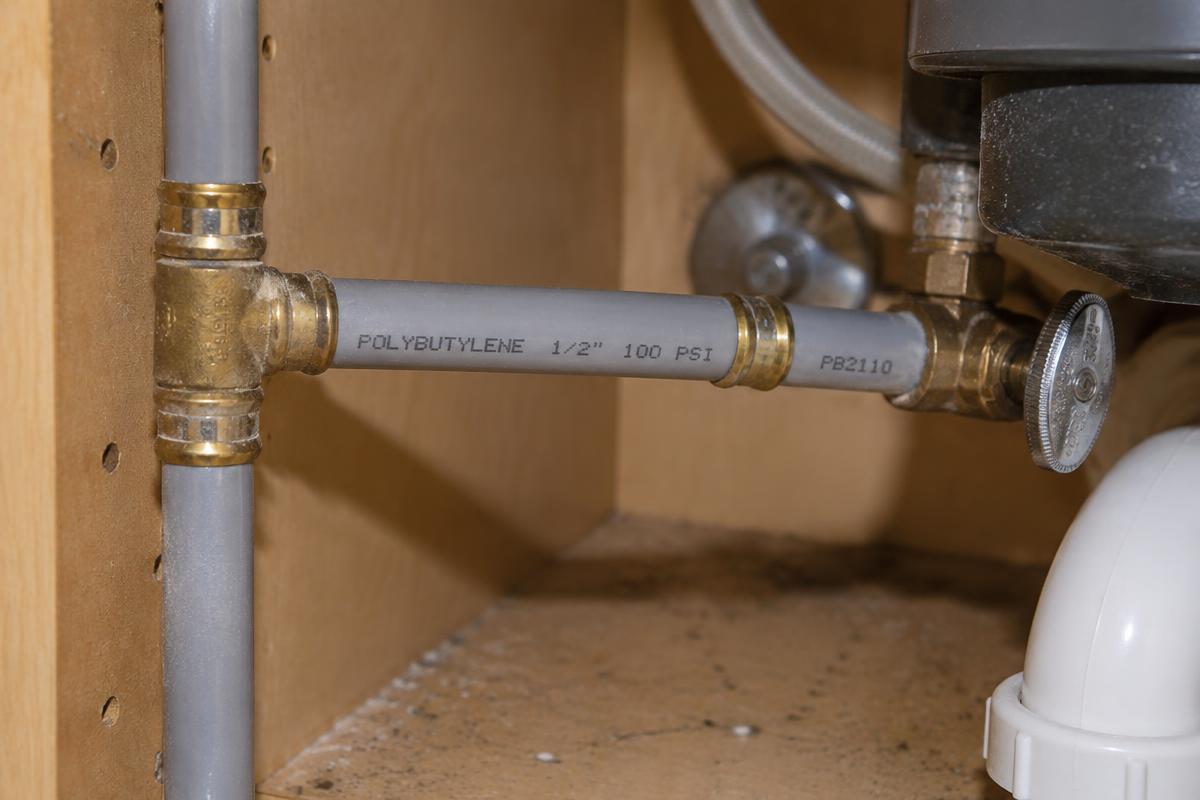
What is polybutylene pipe?
Polybutylene (often just called "PB") is a gray, off-white, or occasionally blue plastic resin pipe that home builders and plumbers used heavily from about 1978 through the mid-1990s, both for underground main water lines and for the supply lines running inside walls and under slabs. It was cheap to produce and fast to install, which made it the go-to choice during the housing boom years — including a lot of the South Florida construction boom of that same era.
Why is it a problem?
The issue isn't how polybutylene was installed — it's the material itself. Chlorine and other oxidants standard in municipal water treatment react with polybutylene over time, causing the interior of the pipe to flake and become brittle from the inside out. Because this happens on the inside, the pipe can look completely fine right up until it doesn't — failures are often sudden, and by the time you see water, it's frequently already behind a wall, under a slab, or inside a ceiling. Polybutylene piping was the subject of large class-action settlements in the 1990s specifically because of how common and how costly these failures turned out to be.
How do I know if my home has it?
A few signs point to polybutylene: your home was built or last fully repiped between roughly 1978 and 1995; the pipe visible at your water heater connection or under sinks is dull gray plastic (often stamped "PB2110"); or you've already had one or two "random" leaks with no clear cause. The only way to know for certain is to have a plumber physically check the visible supply lines and, if needed, inspect further — we cover this as part of a full Whole-Home Plumbing Inspection.
Why you shouldn't wait to replace it
Polybutylene doesn't fail gradually and predictably like a slow drip you can plan around — it tends to fail all at once, often at a fitting or joint you can't see. In a South Florida home, that usually means water damage and mold growth well before anyone notices, since a leak behind a wall or under a slab can run for hours or days before it's visible.
On top of the physical damage, more homeowner's insurance carriers are declining to cover homes with known polybutylene plumbing, or requiring replacement as a condition of coverage — which can also complicate a home sale or refinance down the line. A planned repipe on your schedule is almost always cheaper and less disruptive than an emergency one after a failure.
What does replacement involve?
Replacing polybutylene plumbing means repiping the affected supply lines with a modern material — typically PEX or copper — either as a full whole-home repipe or, in some cases, a partial repipe targeting the highest-risk sections. We assess the scope first so you're not paying to replace pipe that isn't actually polybutylene, and we can usually phase the work to keep water disruption to a minimum. See our Water Line Repair & Replacement page for how we approach a full repipe.
Not sure if your home has polybutylene plumbing? Call 954-445-6443 to schedule an inspection before it becomes an emergency.
Call 954-445-6443